Homelessness contributes to poor mental health, lack of social supports and lack of connection to health services. This is a significant problem of inclusion in health services, and little is known about the pathways taken by adults who are living in homelessness in Dhaka through health services, or why many drop-out of services. This study looked at trends in mental health service use, emergency/crisis-service use, referral completion and continuity of care, as well as experiences that influenced these trends. The design was a sequential mixed-method explanatory. In the quantitative phase, 300 adults who are experiencing homelessness in Dhaka participated. Descriptive statistics was used to analyze the data, chi-square test, and multivariable logistic regression were used to analyze the data. The second phase of the study, the qualitative phase, involved conducting 20 semi-structured interviews with service users and 12 frontline staff, which were analysed using descriptive thematic analyses. It was found that 68.0% of the participants experienced mental distress or emotional distress at the present time or recently and 63.0% indicated that they had an unmet need for mental health support. Fewer than half (39.0%) had been to a mental health service and nearly half (59.0%) had attended an ED. The majority of the participants (73.0%) had poor continuity of care. Poor continuity was associated with longer homelessness, substance use problems, and limited social support, as well as to not being able to identify as a citizen. There was a correlation between improved continuity and outreach contact and formal referral. These patterns were described by six themes of the qualitative analysis: Survival pressure, Stigma, Broken referrals, and Unsafe discharge. The results indicate that there is a need to enhance outreach, active referral, flexibility when registering, and coordination of services across health, housing and social services in order to increase continuity and decrease use of crisis care.
Research ArticleInclusion Health and Mental HealthPublished
Invisible Populations, Visible Outcomes: A Linked-Data Study of Homelessness, Mental Health, and Inclusion-Health Pathways in Dhaka
Correspondence: aasif.wales@gmail.com
Abstract
Keywords HomelessnessMental HealthInclusion HealthCrisis-Service UseDhaka
Introduction
Homelessness is a significant issue of inclusion-health. Those who have it frequently are poorly mentally healthy, have unstable access to services, feel stigmatized and excluded from society. Mental health issues have become a public health problem in Bangladesh and help-seeking by both personal and structural barriers in Dhaka (Jilka et al., 2026; Tune et al., 2020). Several studies on urban poverty in Dhaka also reveal that the eviction, joblessness, inadequate social support and stigma burden the lives of those living on the outskirts of the city (Arefin & Rashid, 2021; Begum & Hossain, 2023). Adults experiencing homelessness are likely to have all of these issues: low mental health status, late care, disjointed referrals and frequent use of crisis services (Henderson et al., 2023; Richards & Kuhn, 2023). But these types of issues are seldom investigated as a connected pathway. A mixed-methods design is applicable to this problem, since it is quantitative data that will demonstrate the pattern, and qualitative data that will account for the reasons for the pattern.
There is still limited evidence on how adults experiencing homelessness in Dhaka move through health and social services. The current research provide limited information on service continuity, service referral and system-level exclusion (Perna et al., 2024; Rabbani et al., 2025). This has resulted in a lack of coherence in policy and service plans, with limited local knowledge. This study is designed to bridge this gap, by merging quantitative data from a cohort with qualitative explanations from service users and frontline staff.
This study is significant for a number of reasons. It contributes local data about homelessness and mental health, which is scarce, in Dhaka. It provides a set of service pathways that are associated with better or worse results. It also provides a forum for both users and staff to have their say and for policy makers to learn not only about the issues they face, but also why. Last but not least, it enables more effective planning of health and social services for a very vulnerable population segment in the city.
Much of the current literature describes the prevalence of homelessness and mental illness, but not the processes by which people transition in and out of care. Numerous studies are also based on small samples at one site and few studies are quantitative patterns coupled with qualitative explanation. In this study, an attempt is made to fill that gap.
Literature Review
Mental health and homelessness are closely linked. Stigma, late recognition of mental illness symptoms, family pressure and poor services in Dhaka all contribute to the delay of seeking help for severe mental illness symptoms (Arafat & Hossain, 2025; Jilka et al., 2026). The barriers are likely to be even greater for adults experiencing homelessness as they are also affected by instability, poverty and exclusion.
Money isn't the only aspect of poverty in Dhaka. Unemployment, eviction, weak social ties and stigma are also experienced by the people living in poverty, which are compounding factors (Begum & Hossain, 2023; Kabir et al., 2023). This has a negative impact on continuity of care and dependence on crisis services for homeless adults.
The situation of accessing healthcare to homeless people in Bangladesh is still unstudied. Some barriers may be due to lack of identification, transportation, lack of coordination between services, discrimination and lack of mental health services (Arafat et al., 2024; Rabbani et al., 2025). These barriers are important as they influence the ability of a person to transition from crisis care into stable, ongoing care.
Seeking help for mental illness is no simple, individual decision. That relies on the family, social environment and the specific type of services provided (Jani et al., 2021; Jilka et al., 2026). For homeless adults, these pathways can result in increased fragmentation, and much greater use of emergency versus planned mental health care.
The global issue of homelessness requires a holistic approach to healthcare, as the root causes of homelessness are not merely structural in nature and can only be addressed by tackling both health and social issues (Amadini et al., 2025; Liu & Hwang, 2021). Homeless people are often the primary (or only) source of contact with the health system in the emergency department, which is associated with poor co-ordination and multiple visits to the emergency department (Hsu et al., 2026; Vohra et al., 2022).
In this context, mixed-methods research can be helpful as quantitative data reveal the patterns of service use, and qualitative data provide understanding of why service use is occurring. Both studies in Bangladesh, based on research in the cities of Dhaka and Chittagong, have found the importance of using quantitative and qualitative evidence (Kabir et al., 2023; Rabbani et al., 2025). In summary, the literature indicates that there is a close connection between mental health, homelessness, stigma and access to health care in Dhaka. But there is currently little compelling local evidence that there is a link between service use and explanations given by service users or staff. This study is filling this void.
Methodology
This study used an explanatory sequential mixed-methods design. The quantitative phase was first and served to identify patterns of services used. A qualitative phase ensued that explained the above patterns. This study was carried out in the city of Dhaka, in Bangladesh, with service records and field sites like shelters, outreach points, and clinics.
Quantitative Phase
The sample consisted of 300 adults (aged 18 years or older) living in Dhaka during the study period. A purposive or consecutive sampling method was used, depending on access to records or field sites. Adults included in the sample were homeless persons (aged 18 years or older) identified from records or field sites, who were able to provide informed consent. Participants were excluded if they were under the age of 18, unable to consent, seriously ill at the data collection stage and when there were incomplete records.
Structured questionnaires (or a form for extracting records) gathered information on socio-demographic information, length and type of homelessness, mental health services utilization, utilization of emergency care services, use of shelter, continuity of care, referral and barriers to access. Independent variables were age, gender, length of homelessness, shelter use, service use, substance use, and social support. The outcomes were mental health service utilization, emergency visits, repeated crisis contacts with mental health services, and continuity of care. Frequencies and percentages were used for summarizing data. For poor continuity of care, and repeated use of crisis services, factors were identified through cross-tabulations, chi-square tests, and multivariable logistic regression.
Qualitative Phase
Semi-structured interviews were conducted with twenty service users and 12 frontline staff. Service users were selected purposively and included to represent each pathway, including the use of services repeatedly in an emergency, service continuity not being realized, and good engagement. Staff were recruited from outreach, referral and shelter management and mental health care. Interviews focused on access challenges, why they are using crisis services, experiences of stigma, coordination issues, and what can help people to do better. Descriptive thematic analysis was used in the analysis of the interviews which were recorded, transcribed and analysed. Codes were developed from the interview data and quantitative data. Service users' and staff's themes were juxtaposed and compared.
Integration and Ethics
During interpretation, quantitative and qualitative results were compiled. The quantitative phase revealed the patterns that were present while the qualitative phase described the reason for the patterns. Data collection was done with ethical approval from the appropriate institutional review board. All participants in the qualitative interviews gave informed consent. The process of conducting interviews was undertaken in a confidential and voluntary manner and special care was taken with vulnerable interviewees.
Results
The quantitative results of the entire sample (N = 300) are presented, followed by the qualitative results from service users and frontline staff (n = 32), and a summary of how the two sets of results fit together.
Quantitative Results
Table 1. Sociodemographic characteristics of adults experiencing homelessness in Dhaka, N = 300
| Characteristic | n | % |
|---|---|---|
| Age group | ||
| 18–29 years | 72 | 24.0 |
| 30–39 years | 93 | 31.0 |
| 40–49 years | 78 | 26.0 |
| 50 years or older | 57 | 19.0 |
| Gender | ||
| Male | 210 | 70.0 |
| Female | 84 | 28.0 |
| Other | 6 | 2.0 |
| Education | ||
| No formal education | 84 | 28.0 |
| Primary education | 105 | 35.0 |
| Secondary education | 81 | 27.0 |
| Higher secondary or above | 30 | 10.0 |
| Main income source | ||
| No regular income | 135 | 45.0 |
| Casual/informal work | 123 | 41.0 |
| Begging/charitable support | 27 | 9.0 |
| Regular employment | 15 | 5.0 |
As seen in Table 1, the majority of the participants were male (70.0%). The largest age group was 30–39 years (31.0%). Low education: 63.0% had no formal education or primary education only. Income was also precarious as 45.0% of individuals had no regular income and 41.0% were engaged in casual work. The results reveal a high socioeconomic disadvantage for the sample as well as homelessness.
Table 2. : Homelessness characteristics and selected health and social vulnerabilities, N = 300
| Characteristic | n | % |
|---|---|---|
| Duration of homelessness | ||
| Less than 6 months | 54 | 18.0 |
| 6–24 months | 99 | 33.0 |
| 2–5 years | 87 | 29.0 |
| More than 5 years | 60 | 20.0 |
| Sleeping arrangement | ||
| Street/public place | 162 | 54.0 |
| Shelter/temporary shelter | 69 | 23.0 |
| Abandoned building | 48 | 16.0 |
| Mixed/other | 21 | 7.0 |
| Selected vulnerabilities | ||
| Current/recent mental distress | 204 | 68.0 |
| Low/absent social support | 195 | 65.0 |
| No usable ID documents | 177 | 59.0 |
| Chronic physical illness | 168 | 56.0 |
| Substance-use difficulty | 147 | 49.0 |
Table 2 shows that homelessness was often long-term: 49.0% had been homeless for two years or more, including 20.0% for over five years. Many (54.0%) typically slept outside. Mental and social vulnerabilities were prevalent: 68.0% had mental distress or were depressed, 65.0% had low social support and 59.0% had no identification documents. Over half were chronically physically ill and 49.0% were substance use difficult. The findings indicate that homelessness and mental distress, physical illness and administrative exclusion were often found in combination.
Figure 1 reveals a disparity between need and use of services. 68.0% experienced mental distress, of which 39.0% had accessed a mental health service compared to 59.0% who had accessed an ED. Approximately 37.0% experienced a repeat crisis contact. Poor referral completion 23.0% of those referred completed a referral and 44.0% received a referral. Only 27.0% of them had a consistent provider, and 73.0% were considered to have poor continuity of care. Over half (58.0%) did not attend one or more appointments, and 63.0% said they had an unmet need for mental health support. The results indicate that for most, early exposure to a service was not followed by sustained interaction.
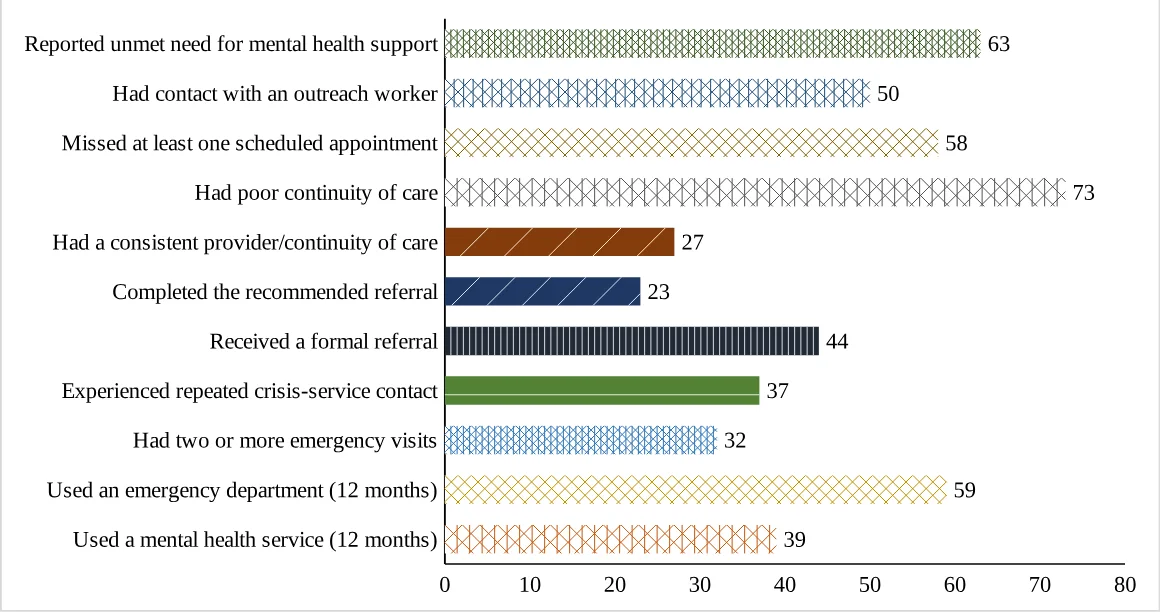
Table 3. : Barriers to accessing mental health and related services, N = 300
| Reported barrier | n | % |
|---|---|---|
| Inability to pay direct/indirect costs | 219 | 73.0 |
| Lack of identification/required documents | 177 | 59.0 |
| Transport difficulty | 168 | 56.0 |
| Stigma, disrespect, or discrimination | 159 | 53.0 |
| Uncertainty about where to obtain help | 153 | 51.0 |
| No reliable phone or contact address | 144 | 48.0 |
| Long waiting time | 126 | 42.0 |
| Lack of a person to accompany/assist | 120 | 40.0 |
| Inflexible opening/appointment hours | 108 | 36.0 |
| Limited availability of mental health services | 99 | 33.0 |
Table 3 shows that cost was the most common barrier, reported by 73.0% of participants. Lack of ID was an issue for 59.0% and transportation issues were at 56.0%. 53.0% reported stigma/discrimination and 51.0% did not know where to get help. Limited mental health services, inflexible hours, lack of an escort and long waiting times were also mentioned. The results presented here indicate that multiple financial, administrative and social issues were at the root of non-use of services, rather than any single factor.
Figure 2 shows that poor continuity of care was linked to several factors. It was greater in participants who were homeless for >2 years (82.3% vs. 64.1%), in participants who had substance use difficulties (83.0% vs. 63.4%) and in participants who had low social support (82.1% vs. 56.2%). It was also greater for those who had no ID document (81.9% vs. 60.2%). Poor continuity occurred less frequently among participants who had outreach contact (61.3% vs. 84.7%), used a shelter or had a formal referral. The associations for all of the groups were significant at p < .001. These are preliminary data, and should not be interpreted as indicating cause and effect.
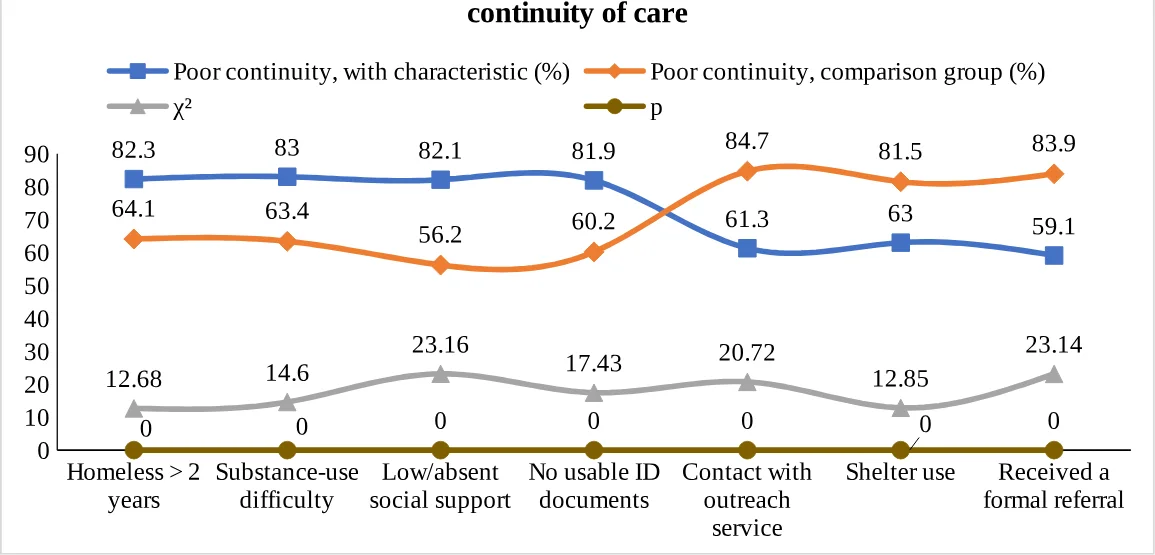
Table 4. : Multivariable logistic regression models for poor continuity of care and repeated crisis-service use
| Predictor | Poor continuity AOR (95% CI) | p | Repeated crisis use AOR (95% CI) | p |
|---|---|---|---|---|
| Age 40+ years | 1.13 (0.65–1.95) | .671 | 1.29 (0.78–2.13) | .324 |
| Female/other vs. male | 0.93 (0.50–1.75) | .826 | 0.86 (0.48–1.54) | .613 |
| Homeless > 2 years | 1.86 (1.04–3.33) | .036 | 1.57 (0.94–2.63) | .086 |
| Substance-use difficulty | 1.79 (1.01–3.18) | .047 | 2.23 (1.35–3.69) | .002 |
| Chronic physical illness | 1.37 (0.77–2.44) | .283 | 1.72 (1.03–2.86) | .038 |
| Low/absent social support | 2.41 (1.31–4.45) | .005 | 1.84 (1.09–3.12) | .023 |
| No usable ID documents | 2.05 (1.15–3.66) | .015 | 1.39 (0.84–2.31) | .202 |
| Shelter use | 0.66 (0.37–1.18) | .160 | 0.84 (0.50–1.40) | .503 |
| Contact with outreach service | 0.47 (0.26–0.84) | .011 | 0.68 (0.41–1.14) | .144 |
| Received a formal referral | 0.39 (0.21–0.71) | .002 | 0.74 (0.43–1.27) | .274 |
| Poor continuity of care | - | - | 2.58 (1.43–4.66) | .002 |
Table 4 shows the results after adjusting for other factors. Difficulty with substance use and poor continuity (AOR = 1.86 and 1.79, respectively) raised the odds of homelessness lasting more than two years. Low social support (AOR = 2.41) and lack of identification (AOR = 2.05) were found to be one of the strongest risk factors. Having a contact at the outreach level and formal referral was associated with reduced odds of poor continuity (AOR = 0.47 and 0.39). Substance-use difficulty, poor continuity of care, low social support and chronic physical illness each increased the risk of repeated crisis-service use, the strongest link being for poor continuity of care (AOR = 2.58). Neither age nor gender nor shelter use nor outreach contact had a significant impact on repeated crisis use, after controlling for the other factors. These results are only indicative of association, as the data is taken from observations.
Qualitative Results
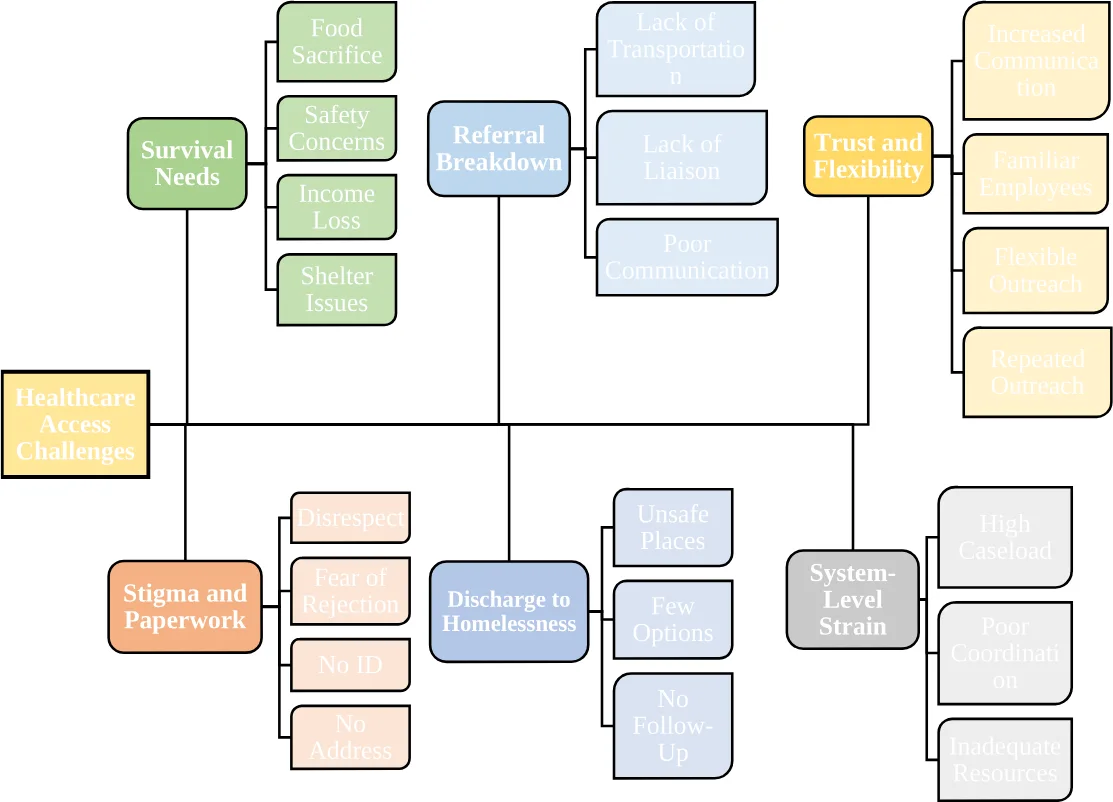
During the qualitative phase, 20 adults experiencing homelessness and 12 frontline staff (n = 32) engaged in outreach, shelter management, referrals, healthcare and case coordination were interviewed. The descriptive thematic analysis approach was used in analysing the interviews. These codes captured participants' experiences around accessing services, follow-up, stigma, crisis services, transitioning between organizations, and what was helpful for them to remain connected. There have been six themes that were developed, each one of which explains a pattern that is revealed in the quantitative results.
Theme 1: Survival Needs Came Before Healthcare
Participants frequently had to seek shelter, safety and food before they could even consider an appointment to clinic. There was a lack of time to go to an appointment, as this could be a loss of income for the day. It was difficult to keep medication safe and take medicines at their correct times when they didn't have a safe area to stay. Users were seen coming to staff for help when the symptoms were at a high level and not because they were not worried about their health, but because they wanted to live.
Theme 2: Stigma and Paperwork Shut People Out
Several described their treatment as suspicious or disrespectful due to their appearance or homelessness. There was some anticipation of rejection before they got to a service. The lack of identification, telephone number or address was a challenge at registration. Staff agreed that they sometimes wanted to help, but were not able to as they needed information that their homeless client could not supply.
Theme 3: Referrals Broke Down Between Services
Participants were frequently directed to another service but not provided with any hands-on assistance to help reach the service. They were not always aware of where to find it, when it was open or the necessary documentation. Referrals were not always followed up with feedback, the client's service worker wouldn't know if the client had been accepted or not and users would have to tell their story to each new service they were referred to. Where a staff member made direct contact with the receiving service and arranged transport this proved to be more effective, referring to the service.
Theme 4: Discharge Back to the Street Brought People Back into Crisis
Emergency services were frequently the most readily available services without an appointment. However, following the treatment, many participants were in the same unsafe living conditions. Staff referred to a cycle of crisis, short-term treatment, discharge and then back to crisis as there was no stable housing or follow-up plan.
Theme 5: Trust and Flexibility Helped People Stay Engaged
Participants were more willing to keep in contact with services when they knew and trusted the worker. Practical support, reminders, assistance identifying or taking someone, was as important as emotional support. Flexible appointments and multiple outreach efforts proved to be more effective than one-time, fixed appointments, staff said.
Theme 6: The Service System Itself Was Under Strain
Staff reported that caseloads were high, there were insufficient mental health resources, there was a lack of continuity of records across agencies and unclear accountability for follow-up. There was an occasional personal link between staff and clients which assisted clients to access care, but this was not a reliable link.
Due to the lack of full transcripts of the interviews, the theme descriptions above provide a summary of the coded results and direct quotations from the text should be used from the original transcripts before the manuscript is submitted for final publication.
Table 5. : Joint display integrating the quantitative and qualitative findings
| Quantitative finding | Qualitative explanation | Integrated interpretation |
|---|---|---|
| 63.0% identified as having unmet mental health need | Users valued survival, and expected that they would be treated with disrespect. | Unmet need wasn't due to disinterest but to material instability and exclusion |
| 73.0% had poor continuity of care | There were no referrals that provided any support | Initiation was seldom followed by a sustained connection |
| Only 23.0% completed a referral | There was no transportation, documents or escorts available for users | Completed only if navigation was supported. |
| 37.0% had repeated crisis contact | Areas reverted to unstable conditions, following treatment | Unsafe discharge resulted in the reproduction of crisis use. |
| Low support (poor continuity and crisis use) | Individuals without trusted people went to services independently. | Social support was a workable care-navigation system |
| Outreach association with reduced likelihood of poor continuity. | Repeated contact and trust was used to engage. | Outreach connected to users and separated formal services. |
Table 5 shows good inter-phase agreement. Reported were high unmet need, lack of continuity of care, and frequent crisis use by the numbers. The interview information provided an account of the ways in which these patterns occurred: via survival pressure, stigma, ineffective handover, and unsafe discharge. The qualitative data also provided additional information, not captured in the numbers, including the importance of having a trusted worker, or telling one's story over and over at every service.
Integration of Findings
The qualitative and quantitative results were quite congruent. The figures indicated that there is high unmet need, lack of continuity and recurrent use of crisis. The interviews clarified these numbers by invoking the concept of survival pressure, stigma, and weak referrals and unsafe discharges. Many instances were found of poor continuity being associated with low social support, for instance, with items such as social support helping with transport, reminders and accompanying clients to services. Similarly, reaching out by contact was associated with improved continuity and repeated contact fostered trust and improved the accessibility of services in the interviews. Combined, the findings indicate that outcomes were influenced by a person's vulnerability, homelessness, administrative challenges, and a disjointed service system.
Discussion
This study focused on the experiences of adults experiencing homelessness in accessing mental health services in Dhaka and the barriers that contribute to the blockages in care pathways. The results indicate a clear evidence of need vs care. Among those that reported mental distress, 68.0% indicated that they also had an unmet mental health services need, but only 39.0% had sought some mental health services. Poor continuity of care was experienced by most participants (73.0%) and more than a third experienced repeated crisis contact. This figures align with the overall scenario in Bangladesh as the World Health Organization (WHO) has found in the country, there is a significant treatment gap and lack of mental health specialists (World Health Organization, 2022). This is not something that can be achieved with a system that is primarily geared towards specialists, particularly when dealing with individuals who are experiencing poverty, homelessness and stigma as well.
The socioeconomic characteristics of the sample supports an inclusion-health approach to homelessness. The majority of the participants were low educated, had no stable income and had a long duration of homelessness. Healthcare for homeless individuals needs to attend to both the clinical and social issues, since only one of these cannot address the structural factors that contribute to homelessness (Bedmar et al., 2022; Liu & Hwang, 2021). This reflects the results of the study in Dhaka, where adults on the street are likely to be poorly educated and lack steady employment, and also have experienced homelessness for many years; and in Dhaka, where adult pavement dwellers are likely to experience deprivation for decades (Begum & Hossain, 2023; Rabbani et al., 2025).
Healthcare often was not a priority, when survival was required. Some participants worked in the informal sector, which meant they would have to miss a day of work if they were required to attend an appointment and did not have income to cover living expenses and food. This is similar to the cost-related barrier which was the most common (73.0%). Similarly, Rabbani et al. (2025) discovered that financial constraints were cited as the reason by most homeless non-users of services for not using services. That indicates that lack of interest in health was not the reason for not attending appointments, as it is often assumed, but rather the need to attend the appointment was not perceived as pressing.
Gap between mental distress and mental health service use is in line with broader evidence. A low uptake of specialist mental health services was identified in a Dhaka informal settlement, with low awareness of specialist services, and concerns about the cost of services, suggested by Jilka et al. (2026). Koly et al. (2024) found stigma, cost, inadequacies in staff, and a lack of referral systems to be significant challenges in the mental health system in Bangladesh. For adults experiencing homelessness, these obstacles are compounded by a lack of social support, not having access to a phone and unstable housing.
Use of emergency and crisis services was frequent, and continuity of services was uncommon. This is consistent with evidence about how the ED is the primary health system contact for homeless people, and has been associated with ED reattendance (Cavanaugh et al., 2024; Vohra et al., 2022). The poor continuity of care was significantly associated with repeated crisis use with AOR = 2.58 in this study. This can be explained by a qualitative theme of discharge back to the street as short term treatment did not address the unsafe circumstances that led to the crisis, people went back to services again.
Lack of identification, cost, transport issues, and lack of knowledge of where to get help were very often used in combination. National Guideline Alliance (UK) (2022) also revealed that mobility associated with homelessness presents challenges for the registration with health and social protection systems. This implies that the normal registration procedures, designed for individuals who have a fixed dwelling may inadvertently neglect homeless adults.
Stigma was also prevalent (more than half of participants reported this). This mirrors a systematic review which found that stigma by providers is a barrier to access and willingness to enter care among people experiencing homelessness, whereas, a respectful approach to relationships was found to increase engagement (Galán-Sanantonio & Botija, 2024; Reilly et al., 2022). This study found that staff who were respectful, who remembered having interacted with the participant before and who continued to connect with the participant over time had a more positive engagement level.
Lack of social support was a significant risk factor for poor continuity and multiple crisis use. Emotional support was provided by supportive people, as well as by providing practical support for example by providing transport, reminders and accompanying, but not only emotionally. This aligns with evidence to show that family and community support are important ways for individuals to cope with stress and material difficulties in Dhaka, but that they cannot substitute for stable housing, or access to services (Kabir et al., 2023).
There was a positive association between outreach contact and formal referral and better continuity of care. Passive referrals (giving advice or a facility name) were least effective, however, when they were active (where there was a confirmation of the appointment, transport was made and followed-up by a staff member), they were most effective. This is consistent with evidence on the benefits of patient navigation for increasing completion of multi-step care processes for homeless populations (Baggett et al., 2024), and evidence on the benefits of case management for housing and engagement (Roy et al., 2024; Weightman et al., 2023).
Safe discharge planning, as well as housing, is also a factor. It is difficult to take medicine without somewhere to keep them and if medication is not given and they are not recovered at home it can be detrimental to the treatment. Audits conducted in hospitals indicate that homeless patients have complex needs that may need to be supported with housing as well as clinical services (Nadicksbernd et al., 2023). While housing interventions can help to increase stability and can positively impact a number of mental health outcomes, they are not a complete answer to all issues (Onapa et al., 2022; Weightman et al., 2023).
High caseloads and the lack of communication between organizations and responsibility for follow-up were also problems that frontline staff faced in a system. This is consistent with the Bangladesh mental health and primary care systems' fragmented nature as evidenced by Koly et al. (2024) and Rabbani et al. (2025). Specialist care alone is not sufficient to address demand and task sharing, with the use of tools such as the WHO's mhGAP programme, could be used to close the gap.
This study utilized patterns of both the quantitative and qualitative type, included both the service user and the staff and provided explanations for both the pattern and why it occurred. The quantitative design was a cross sectional design, however, this cannot be confirmed as a cause and effect. People not involved in any service/place were not necessarily included in purposive sampling. The mental distress measure was not a clinical diagnosis and self-reported data might be subject to recall or reporting bias. This was a qualitative sample which was not statistically generalizable, and quotations from the interview should be included from complete transcripts prior to publication.
Conclusion
In this study, the mental health-related service pathways of adults who are homeless in Dhaka were explored. It identified a clear gap between need and care, as the majority of the participants had mental distress and there was unmet mental health needs, however, very few participants used mental health services regularly. The continuity of care was poor in most cases and many were using repeated emergency contact and not planned treatment.
Poor continuity of care was associated with longer homelessness, substance-use issues and lack of social support, as well as not having identification documents. There was a link between Outreach contact and Formal Referral and continuity. These patterns were explained by the qualitative results: survival needs were prioritized over healthcare, stigma and paperwork prevented people from being engaged, there was a high rate of referrals between services, unstable housing post discharge caused people to fall back into crisis, trust and flexibility helped engagement and the service system was stretched.
The results indicate that each of these factors is not solely responsible for poor mental health outcomes for homeless adults. These are a result of a combination of the vulnerability of the individual, housing insecurity, social isolation and the disjointed service system. For whatever reason, missed appointments and disruptions in care frequently are indicators of survival stress, rather than of neglectfulness towards care.
A comprehensive approach is likely to be needed to achieve better outcomes. This involves low threshold outreach offering real assessment, treatment and active referral, coupled with practical assistance and not just advice, flexible registration for those without fixed documents or addresses, coordinated hospital discharge which considers housing and follow up, and mental health support provided by trained non-specialist workers as there is a shortage of mental health specialists in Bangladesh. Housing and social protection should also be integrated with health services as stable housing helps to facilitate treatment, but is not a substitute for it.
Longer-term studies should be conducted with follow-up designs to measure the pathways of services over time and longer-term interventions like outreach, patient navigation, flexible registration and supported discharge should be piloted. Homelessness should be at the core of the design and evaluation of these services, with the voices of those who have experienced homelessness heard.
In other words, health outcomes for homeless individuals should be influenced by the accessibility of service; the ease with which individuals can connect to services; and the accountability of services throughout the service encounter and the entire service pathway, not just one encounter or crisis.
Acknowledgements
The author would like to express his gratitude to the service users, frontline staff and organizations in Dhaka based that facilitated this research and also to the Department of Public Health and Social Care in Practice, University of Wales Trinity Saint David for academic support and supervision during this research.
Declaration of Interest
The author has no relevant conflict of interest to declare.
Funding
This research was not funded by any specific grant from funding agency in the public, commercial or not-for-profit sectors.
Ethics Declaration
The data collection was done after getting ethical clearance from the corresponding institutional review board. All the participants in the qualitative phase gave informed consent. Confidentiality, privacy and voluntary participation was respected all along the study.
Author Contribution
Mahir Al Asif Masrur designed, collected supervision, analyzed, interpreted and wrote this manuscript.
AI Declaration
Language editing, structuring and drafting assistance were supported with the help of generative AI tools in the preparation of this manuscript. The author has read, reviewed and approved the accuracy, integrity and originality of all the content presented.
References
- Amadini, M., Pasini, E., & Puccio, F. (2025). Editorial: Exploring the multidimensional impact of homelessness on health and social inclusion. Frontiers in Public Health, 13, 1749189. https://doi.org/10.3389/fpubh.2025.1749189
- Arafat, S. M. Y., Giasuddin, N. A., & Mazumder, A. H. (2024). Access to Mental Health Care in Bangladesh—Current Status, Potential Challenges, and Ways Out. In S. M. Y. Arafat & S. K. Kar (Eds.), Access to Mental Health Care in South Asia (pp. 29–55). Springer Nature Singapore. https://doi.org/10.1007/978-981-99-9153-2_3
- Arafat, S. M. Y., & Hossain, S. (2025). Stigma towards mental illness in Bangladesh: An update. Geopsychiatry, 2, 100037. https://doi.org/10.1016/j.geopsy.2025.100037
- Arefin, S., & Rashid, T. (2021). The Urban Poor In Dhaka: Perspectives On The Right To The City. Journal of Urban and Regional Analysis, 13(1). https://doi.org/10.37043/JURA.2021.13.1.9
- Baggett, T. P., Sporn, N., Barbosa Teixeira, J., Rodriguez, E. C., Anandakugan, N., Critchley, N., Kennedy, E., Hart, K., Joyce, A., Chang, Y., Percac-Lima, S., Park, E. R., & Rigotti, N. A. (2024). Patient Navigation for Lung Cancer Screening at a Health Care for the Homeless Program: A Randomized Clinical Trial. JAMA Internal Medicine, 184(8), 892. https://doi.org/10.1001/jamainternmed.2024.1662
- Bedmar, M. A., Bennasar-Veny, M., Artigas-Lelong, B., Salvà-Mut, F., Pou, J., Capitán-Moyano, L., García-Toro, M., & Yáñez, A. M. (2022). Health and access to healthcare in homeless people: Protocol for a mixed-methods study. Medicine, 101(7), e28816. https://doi.org/10.1097/MD.0000000000028816
- Begum, A., & Hossain, K. Z. (2023). Déjà Vu: The Untenable Reality of the Pavement Dwellers of Dhaka – Evidence from Three Decades. Journal of Regional and City Planning, 34(3), 322–341. https://doi.org/10.5614/jpwk.2023.34.3.6
- Cavanaugh, G., Hardigan, P., Ownby, R., Stanis, S., Karur, P., Patel, R. K., & Patel, D. H. (2024). Formative Assessment and Cluster Membership of Homeless Persons’ Emergency Department Visits. Cureus. https://doi.org/10.7759/cureus.64188
- Galán-Sanantonio, A., & Botija, M. (2024). Barriers and Opportunities in Accessing Social Care for Women Experiencing Homelessness: A Systematic Integrative Review. Health & Social Care in the Community, 2024(1), 3010747. https://doi.org/10.1155/2024/3010747
- Henderson, K. A., Manian, N., Rog, D. J., Robison, E., Jorge, E., & Al-Abdulmunem, M. (2023). Addressing Homelessness Among Older Adults: Final Report. https://aspe.hhs.gov/sites/default/files/documents/9ac2d2a7e8c360b4e75932b96f59a20b/addressing-older-adult-homelessness.pdf
- Hsu, A., Light, M. A., Fockele, C., Hay, S., Liang, S. Y., Macias-Konstantopoulos, W., Brim, C. B., & Weber, W. (2026). Supporting Emergency Department Patients Experiencing Homelessness. JACEP Open, 7(1), 100310. https://doi.org/10.1016/j.acepjo.2025.100310
- Jani, A., Ravishankar, S., Kumar, N., Vimitha, J., Shah, S., Pari, A., & Ramasubramaniam, C. (2021). Factors influencing care-seeking behaviour for mental illness in India: A situational analysis in Tamil Nadu. Journal of Public Health, 43(Supplement_2), ii10–ii16. https://doi.org/10.1093/pubmed/fdab131
- Jilka, S., Siddiqi, B., Winsper, C., Bouliotis, G., Read, U. M., Soron, T., Shammin, A., Smith, S. J., Morroni, D., Ahmed, H. U., Omigbodun, O., & Singh, S. P. (2026). Influences on help-seeking for serious mental illness in Dhaka, bangladesh: A mixed-methods study. Social Psychiatry and Psychiatric Epidemiology, 61(2), 357–365. https://doi.org/10.1007/s00127-025-03012-0
- Kabir, S. S., Chowdhury, A., Smith, J., Morgan, R., Wenham, C., & Rashid, S. F. (2023). A Social Cure for COVID-19: Importance of Networks in Combatting Socio-Economic and Emotional Health Challenges in Informal Settlements in Dhaka, Bangladesh. Social Sciences, 12(3), 127. https://doi.org/10.3390/socsci12030127
- Koly, K. N., Saba, J., Rao, M., Rasheed, S., Reidpath, D. D., Armstrong, S., & Gnani, S. (2024). Stakeholder perspectives of mental healthcare services in Bangladesh, its challenges and opportunities: A qualitative study. Cambridge Prisms: Global Mental Health, 11, e37. https://doi.org/10.1017/gmh.2024.30
- Liu, M., & Hwang, S. W. (2021). Health care for homeless people. Nature Reviews Disease Primers, 7(1), 5. https://doi.org/10.1038/s41572-020-00241-2
- Nadicksbernd, J., Nguyen, T., Jackson, T., & Shulman, C. (2023). Health and care needs of hospitalised people experiencing homelessness: An inpatient audit. Clinical Medicine, 23(4), 395–402. https://doi.org/10.7861/clinmed.2023-0074 National Guideline Alliance (UK). (2022). Evidence review for views and experiences of health and social care for people experiencing homelessness: Integrated health and social care for people experiencing homelessness: Evidence review C. National Institute for Health and Care Excellence (NICE). http://www.ncbi.nlm.nih.gov/books/NBK579614/
- Onapa, H., Sharpley, C. F., Bitsika, V., McMillan, M. E., MacLure, K., Smith, L., & Agnew, L. L. (2022). The physical and mental health effects of housing homeless people: A systematic review. Health & Social Care in the Community, 30(2), 448–468. https://doi.org/10.1111/hsc.13486
- Perna, L. K., Patterson, C., Chairez, A. A., Lewis, J., Jordan, J., Komara, H., & Harris, H. (2024). Healthcare outcomes for unsheltered persons experiencing homelessness using a street medicine model of care: A pilot program evaluation. Cogent Social Sciences, 10(1), 2328895. https://doi.org/10.1080/23311886.2024.2328895 Rabbani, Md. G., Akter, O., Prova, H. A., Huda, Md. S., Tawseef, T., Hasan, Md. Z., Joarder, T., Mahmood, S. S., & Alamgir, H. M. (2025). Barriers to access and factors associated with health care utilization among the adult homeless population in Dhaka, Bangladesh: A mixed method cross-sectional study. BMC Public Health, 26(1), 81. https://doi.org/10.1186/s12889-025-24471-9
- Reilly, J., Ho, I., & Williamson, A. (2022). A systematic review of the effect of stigma on the health of people experiencing homelessness. Health & Social Care in the Community, 30(6), 2128–2141. https://doi.org/10.1111/hsc.13884
- Richards, J., & Kuhn, R. (2023). Unsheltered Homelessness and Health: A Literature Review. AJPM Focus, 2(1), 100043. https://doi.org/10.1016/j.focus.2022.100043
- Roy, R., Raman, K. J., Raj, E. A., & Varambally, S. (2024). Outcomes of psychosocial interventions for homeless individuals with mental illness: A systematic review. International Journal of Social Psychiatry, 70(5), 841–849. https://doi.org/10.1177/00207640231217173 Tune, S. N. B. K., Hoque, R., Naher, N., Islam, N., Mazedul Islam, Md., & Ahmed, S. M. (2020). Health, illness and healthcare-seeking behaviour of the street dwellers of Dhaka City, Bangladesh: Qualitative exploratory study. BMJ Open, 10(10), e035663. https://doi.org/10.1136/bmjopen-2019-035663
- Vohra, N., Paudyal, V., & Price, M. J. (2022). Homelessness and the use of Emergency Department as a source of healthcare: A systematic review. International Journal of Emergency Medicine, 15(1), 32. https://doi.org/10.1186/s12245-022-00435-3
- Weightman, A. L., Kelson, M. J., Thomas, I., Mann, M. K., Searchfield, L., Willis, S., Hannigan, B., Smith, R. J., & Cordiner, R. (2023). Exploring the effect of case management in homelessness per components: A systematic review of effectiveness and implementation, with meta‐analysis and thematic synthesis. Campbell Systematic Reviews, 19(2), e1329. https://doi.org/10.1002/cl2.1329 World Health Organization. (2022). Prevention and management ofmental health conditionsin Bangladesh. https://www.who.int/publications/i/item/mhgap-intervention-guide-for-mental-neurological-and-substance-use-disorders-in-non-specialized-health-settings
CITE THIS ARTICLE
Masrur, M. A. A. (2024). Invisible Populations, Visible Outcomes: A Linked-Data Study of Homelessness, Mental Health, and Inclusion-Health Pathways in Dhaka. International Journal of Medical and Health Research, 2(1), 38–50. https://doi.org/10.61424/ijmhr.v2i1.1087
M. A. A. Masrur, “Invisible Populations, Visible Outcomes: A Linked-Data Study of Homelessness, Mental Health, and Inclusion-Health Pathways in Dhaka,” International Journal of Medical and Health Research, vol. 2, no. 1, pp. 38–50, 2024. doi: 10.61424/ijmhr.v2i1.1087.
Masrur, M. A. A. (2024) ‘Invisible Populations, Visible Outcomes: A Linked-Data Study of Homelessness, Mental Health, and Inclusion-Health Pathways in Dhaka’. International Journal of Medical and Health Research, 2(1), 38–50. Available at: https://doi.org/10.61424/ijmhr.v2i1.1087
Masrur, Mahir Al Asif. “Invisible Populations, Visible Outcomes: A Linked-Data Study of Homelessness, Mental Health, and Inclusion-Health Pathways in Dhaka.” International Journal of Medical and Health Research, 2(1), 38–50, 2024, https://doi.org/10.61424/ijmhr.v2i1.1087.
Mahir Al Asif Masrur. “Invisible Populations, Visible Outcomes: A Linked-Data Study of Homelessness, Mental Health, and Inclusion-Health Pathways in Dhaka.” International Journal of Medical and Health Research, 2(1), 38–50 (2024). https://doi.org/10.61424/ijmhr.v2i1.1087.
Masrur MAA. Invisible Populations, Visible Outcomes: A Linked-Data Study of Homelessness, Mental Health, and Inclusion-Health Pathways in Dhaka. International Journal of Medical and Health Research. 2024;2(1):38–50. https://doi.org/10.61424/ijmhr.v2i1.1087
@article{article_45e7b43637534bee8906a7345e85a655,
  title = {Invisible Populations, Visible Outcomes: A Linked-Data Study of Homelessness, Mental Health, and Inclusion-Health Pathways in Dhaka},
  author = {Mahir Al Asif Masrur},
  year = {2024},
  journal = {International Journal of Medical and Health Research},
  volume = {2},
  number = {1},
  pages = {38–50},
  doi = {10.61424/ijmhr.v2i1.1087},
  url = {https://www.researchbymahir.com/article/45e7b436-3753-4bee-8906-a7345e85a655},
}
TY - JOUR AU - Mahir Al Asif Masrur TI - Invisible Populations, Visible Outcomes: A Linked-Data Study of Homelessness, Mental Health, and Inclusion-Health Pathways in Dhaka PY - 2024 JO - International Journal of Medical and Health Research VL - 2 IS - 1 SP - 38 EP - 50 DO - 10.61424/ijmhr.v2i1.1087 UR - https://www.researchbymahir.com/article/45e7b436-3753-4bee-8906-a7345e85a655 ER -